
What Are SSL Proxies?
SSL (HTTPS) proxies handle encrypted traffic. What that means technically, and why it's the baseline rather than a premium feature.
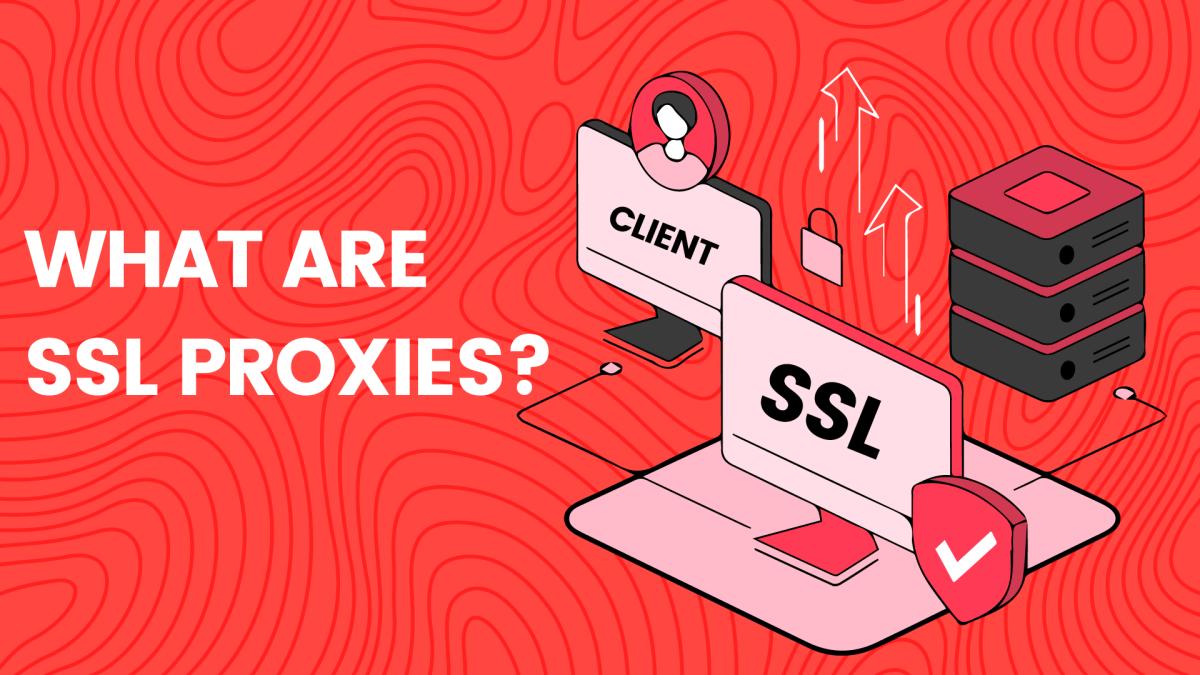
What the term covers
An SSL proxy — more accurately an HTTPS proxy — handles connections protected by TLS. In the common setup the client sends a CONNECT request, the proxy opens a tunnel to the destination, and the encrypted session runs end to end through it. The proxy moves the bytes without being able to read them.
Why it matters
Practically every site worth requesting is HTTPS-only now. A proxy that can't tunnel TLS is a proxy that can't fetch the modern web. So "SSL support" isn't a feature to shop for; it's a minimum any real provider meets.
Interception is a separate thing
Some corporate deployments do decrypt and re-encrypt traffic to inspect it, which requires installing the proxy's certificate on the client. That's SSL inspection — a security-team tool, not something you want from a commercial proxy. If a provider asks you to install a root certificate to browse normally, ask why.
What to check instead
- Correct CONNECT handling with no downgrade attempts
- Support for current TLS versions so your fingerprint looks normal
- SOCKS5 as an alternative for non-HTTP protocols
- No header injection that reveals the original client
TLS fingerprints
Worth knowing: sites increasingly look at how your client negotiates TLS, not just the IP. A Python script has a different handshake signature from Chrome. When a clean residential IP still gets blocked, this is often the reason — and the fix is a browser-grade client, not a different proxy.
Spin up your first session in 60 seconds.
250 MB on us, activated by our team in live chat. No credit card. Real residential and mobile IPs across 195+ countries.