
ISP Proxies Vs. Residential Proxies: Main Differences
Both look residential to a website. One is static and fast, the other is rotating and enormous — and that decides which job each gets.
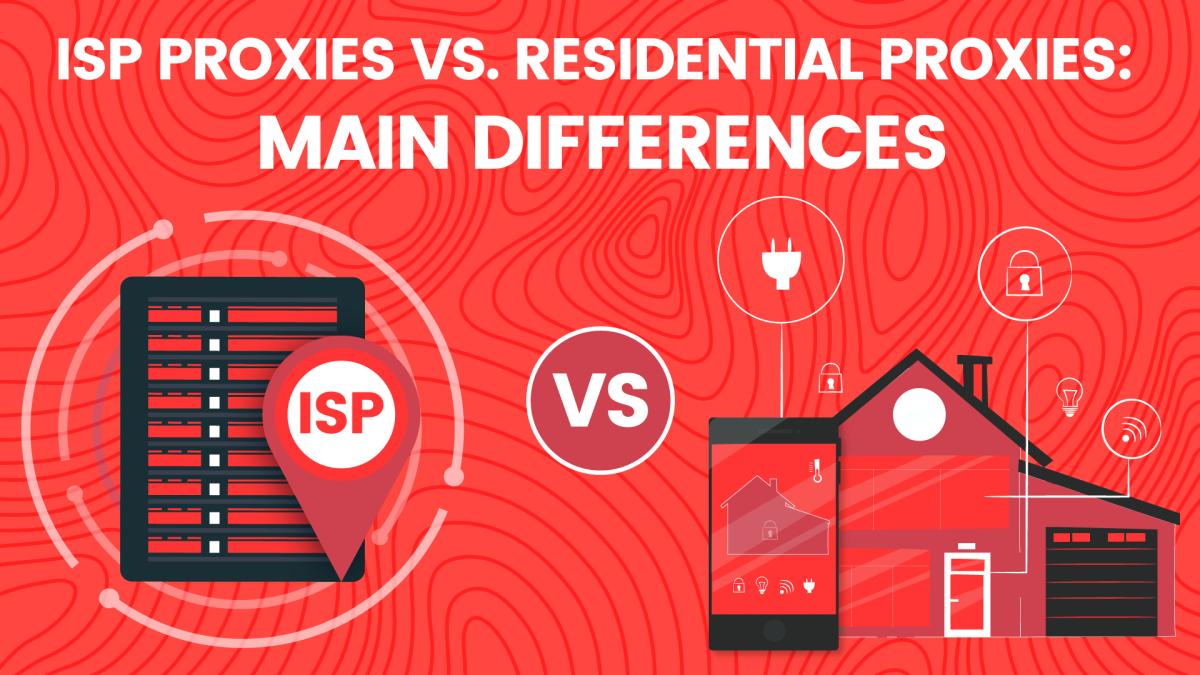
What ISP proxies are
Addresses registered to a consumer ISP but hosted on datacenter hardware. A lookup shows a residential ISP, so the reputation is good, while the machine behind it has datacenter bandwidth and uptime. They're static: the same address, every day.
What residential proxies are
Real IPs on real household connections, reached through a peer network. They rotate by nature, cover far more locations, and are billed per gigabyte because the traffic runs over someone's actual line.
The differences that matter
Speed. ISP wins clearly — no home router in the path, no variable last mile.
Stability. ISP addresses don't change. Residential exits are transient by design.
Scale. Residential pools run into the tens or hundreds of millions of addresses. ISP pools are thousands to tens of thousands.
Diversity. Residential spreads across countless subnets and cities. ISP addresses often cluster in a handful of ranges, which sophisticated targets can notice.
Pricing. ISP is per IP per month; residential is per gigabyte. Heavy bandwidth on few identities favours ISP. Light bandwidth across many identities favours residential.
Choosing
Use ISP for long-lived accounts, whitelisted access, sneaker and ticket setups where speed decides the outcome, and any integration that hates changing addresses.
Use residential for scraping, geo research, ad verification and anything that needs many different-looking visitors.
Running both
The common production pattern: ISP addresses hold the accounts and the fast paths, residential does the wide collection. They're complements, not alternatives — and picking one for everything is how teams end up either overspending on bandwidth or fighting blocks they didn't need to fight.
Spin up your first session in 60 seconds.
250 MB on us, activated by our team in live chat. No credit card. Real residential and mobile IPs across 195+ countries.